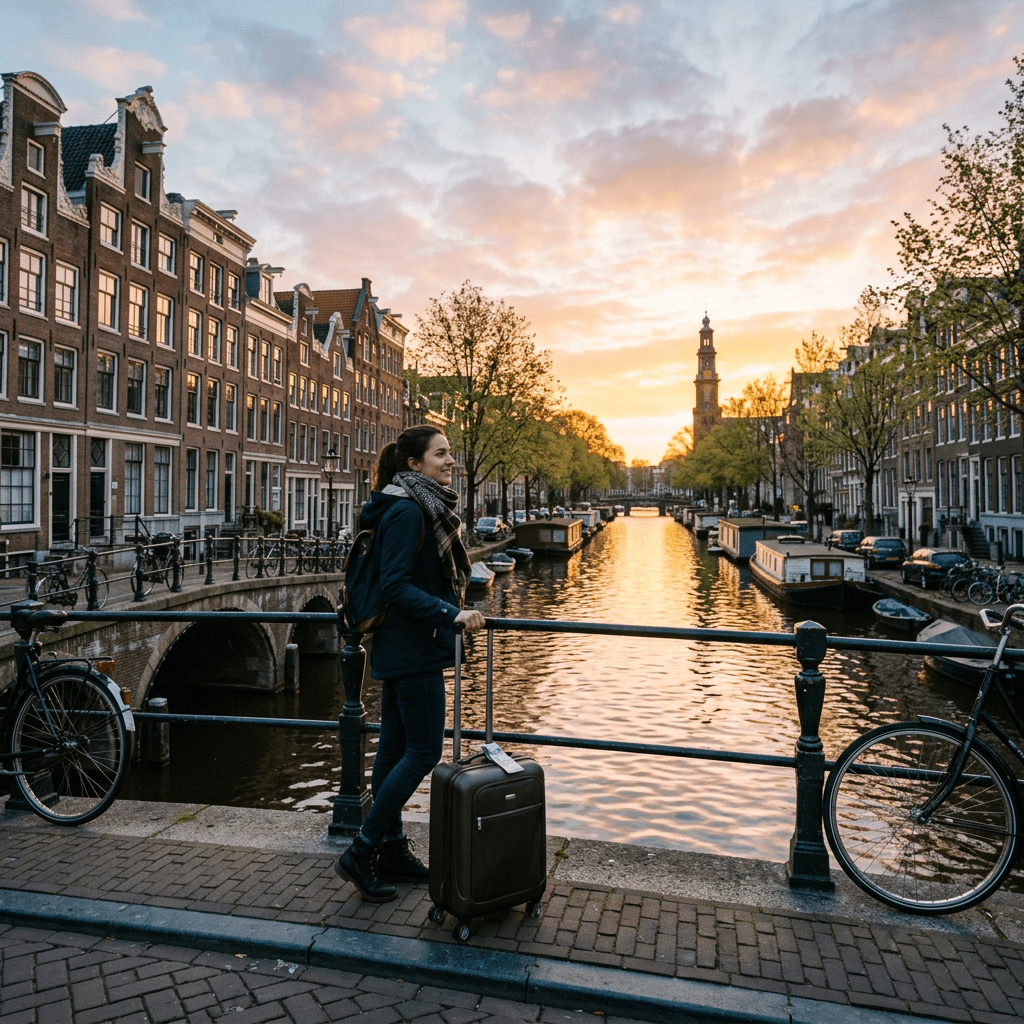
Moving to the Netherlands is exciting, but the first month can feel like a puzzle made of admin, appointments, and small cultural surprises. When I moved from Scotland to the Netherlands, I realised there were a few things I really should have sorted earlier — and a few things that turned out to be much easier than expected.
Here’s a simple, practical checklist to help your first month run smoothly.
1. Bring the right documents with you
Dutch admin is efficient, but only if you have the correct paperwork. Before you arrive, make sure you have:
- Passport
- Birth certificate
- Marriage certificate or relationship evidence (if applicable)
- Proof of address
- Proof of income or savings
- Any visa or IND documents
You’ll need these for almost everything: registering at the gemeente, opening a bank account, and sometimes even renting a flat. You also might need to obtain an Apostille certificate for documents such as a birth certificate to prove the documents authenticity.
2. Book your gemeente registration early
You can’t do much in the Netherlands until you’re registered.
You’ll need to:
- Make an appointment at your local gemeente
- Bring your documents
- Register your address
- Receive your BSN (citizen service number)
Your BSN unlocks everything else — bank accounts, jobs, health insurance — so getting this done early makes the rest of the month much easier. I luckily was able to do it before I officially moved over, which made things a whole lot easier when I actually moved over. Also if you are moving furniture, then the removal company may also ask for your BSN or proof of registration.
3. Sort out health insurance (it’s mandatory)
You must take out Dutch health insurance within four months of registering, but most people do it much sooner because you’ll need it for GP registration and peace of mind.
Key things to know:
- Basic insurance is mandatory
- You choose your own insurer
- You can compare policies online
- You’ll pay monthly, not yearly
It’s one of the more confusing parts of moving, but once it’s set up, it’s very straightforward.
4. Open a Dutch bank account
Some banks require a BSN, some don’t — but having a Dutch account makes life easier from day one.
You’ll use it for:
- Rent
- Groceries
- Online shopping
- Public transport
- Paying bills
Most banks let you open an account online, but expect to show ID and proof of address.
5. Get your phone and internet sorted
Dutch providers are strict about ID, but once you’re set up, everything works smoothly.
Your options:
- eSIM (very convenient)
- Prepaid SIM
- Monthly contract
Internet installation can take a couple of weeks, so book it early if you’re moving into a new place. I opted for an eSim which I used in my iPhone as a Dual Sim. This was perfect as it meant I could also keep my UK number as well which I keep active.
6. Learn the basics of Dutch transport
You’ll use public transport more than you expect — and cycling rules matter more than you think.
In your first month:
- Get an OV‑chipkaart or set up OVpay on your phone
- Learn how to check train delays (they happen)
- Get used to cyclists having right of way
- Also look up the rules of the road and familiarise yourself with them as I found out the rules, particularly at unmarked junctions vary a little from the UK.
Transport is reliable, but it has its own rhythm.
8. Set up the apps you’ll actually use
Your first month becomes much easier with these:
- DigiD (for government services)
- NS app (public transport)
- Tikkie (for splitting payments)
- Your bank app
- Buienradar (for the weather… trust me)
- ANWB (I use for checking fuel prices)
There are probably others but these are the ones I tend to use most frequently.
9. Register with a GP (huisarts) early
Finding a GP in the Netherlands can take longer than you expect, especially in smaller towns where practices fill up quickly. You don’t need to be sick to register — in fact, it’s better to do it while everything is calm.
How it works:
- You register with one GP practice near your home
- They may ask for your BSN and health insurance details so make sure you sort health insurance out first or you may get a seperate bill sent to you
- Some practices have waiting lists
- You’ll usually fill out a short intake form
Once you’re registered, you can book appointments, request repeat prescriptions, and get referrals if you ever need specialist care. Hospitals and specialists require a GP referral for almost everything, so having a huisarts in place saves a lot of stress later.
Also note, if you are luckily moving to live with your Dutch partner who is already registered at a GP, you should be able to bypass the waiting list and be accepted at the GP straight away.
10. Set up your waste & recycling schedule
This is one of those easy things to get out the way and put into your weekly routine quickly.
In your first month:
- Download your gemeente’s waste calendar
- Learn which bins go out on which days
- Check if you need a pass for underground containers
- Get used to separating plastic, paper, and organic waste
It sounds small, but it’s one of the quickest ways to feel settled and “in the rhythm” of Dutch daily life.
Conclusion
Your first month in the Netherlands doesn’t have to be overwhelming. With the right documents, a few key appointments, and a basic understanding of how things work here, everything falls into place surprisingly fast. And once it does, you can start enjoying the reason you moved in the first place.
 oranjeroots
Leave a comment